The portfolio maintained a maximum drawdown of only 1.38%, demonstrating disciplined downside control and efficient capital preservation. Temporary declines were limited in both depth and duration, while a Recovery Factor of 4.13× indicates the strategy consistently regained losses and continued generating positive returns. Overall, the risk profile reflects a systematic approach focused on protecting capital while maintaining long-term performance.
Category:
Risk Analytics
Asset Class
XAU/USD


Detailed Analysis of the Chart
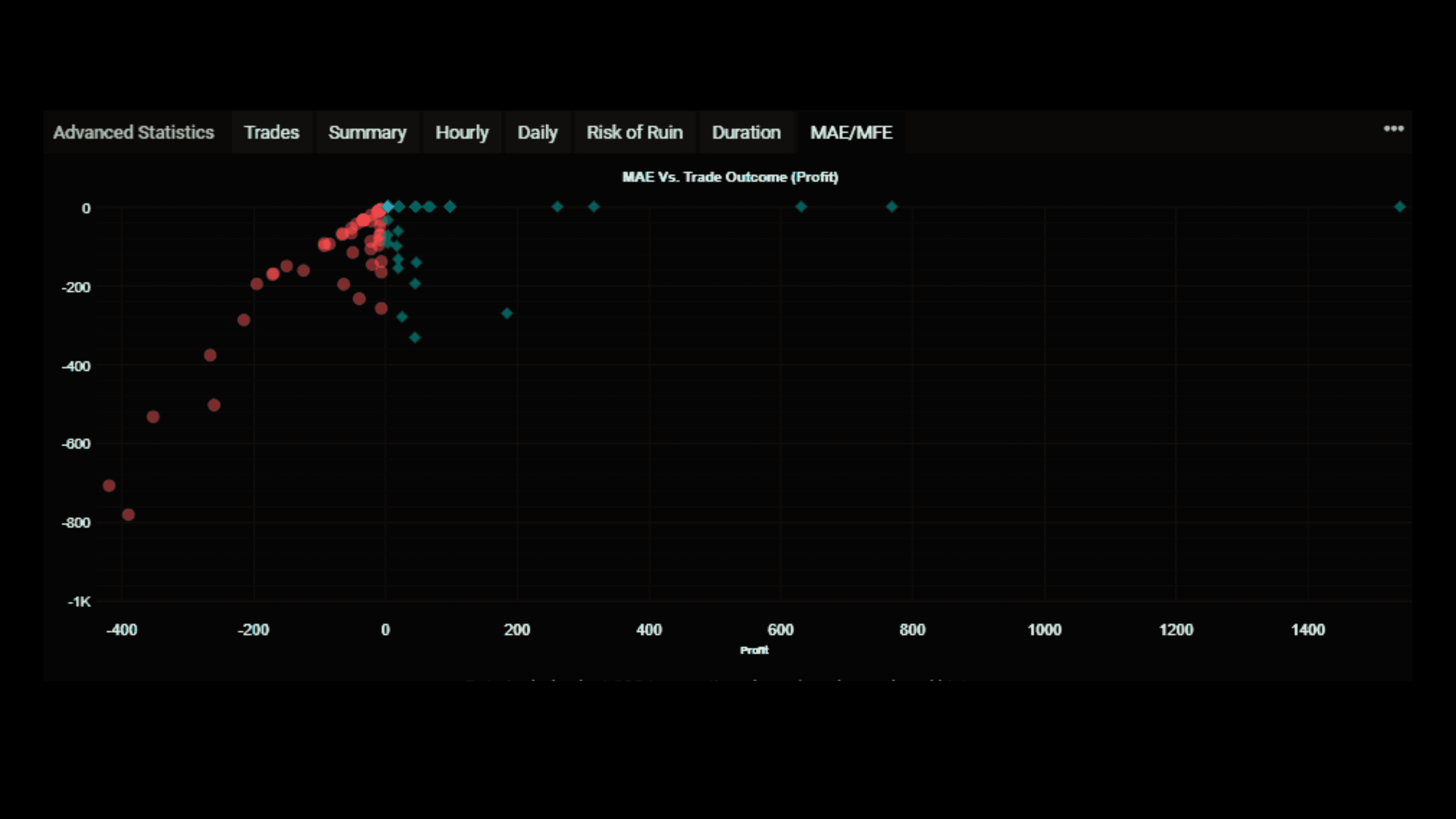
The MAE versus Trade Outcome distribution illustrates how individual trades behaved while they were active, offering a deeper understanding of execution quality beyond traditional performance statistics. The majority of profitable trades experienced relatively limited adverse price movement before closing in profit, indicating that entries were generally well timed and aligned with prevailing market conditions. This suggests the algorithm is capable of identifying favorable opportunities without requiring excessive drawdown before reaching target levels. Losing trades remain concentrated within a controlled range of adverse movement, reflecting disciplined exit management and predefined risk parameters. The absence of widespread extreme outliers indicates that losses were not allowed to expand uncontrollably, supporting a structured approach to capital preservation. Several high performing trades generated substantial profits while maintaining comparatively low adverse excursions, highlighting the strategy's ability to capture directional market moves efficiently once positions were established. Overall, the distribution demonstrates a balanced relationship between trade risk and realized outcomes, reinforcing the consistency of the algorithm's execution process.
Investor Takeaway
The MAE analysis indicates that the strategy generally converts favorable trade opportunities into realized profits without exposing positions to excessive interim drawdowns. The concentration of profitable trades within low adverse movement ranges reflects disciplined entries and efficient execution, while the controlled distribution of losing trades suggests that risk remains governed by predefined exit rules. Together, these characteristics support confidence in the strategy's ability to preserve capital while maintaining a repeatable and systematic trading process.